







How to Make Your New Home Safe and Secure
(A Complete Move-In Checklist)
Moving into a new home is an exciting time. Amongst the moving boxes, the furniture decisions, and the change-of-address forms, home security is one thing that simply can’t wait. You don’t know who has a spare key, whether the old smoke alarms work, or if the back gate latch is broken.
Making your new home safe and secure doesn’t have to be complicated or expensive. Here’s a step-by-step guide to getting it done.
Step 1: Change the locks
This is the single most important thing you can do when moving into a new home. Previous owners, tenants, real estate agents, tradespeople and neighbours — many people could have a copy of your old keys.
What to do:
- Replace the deadbolts on all external doors
- Consider upgrading to high-security locks (look for Grade 1 deadbolts or Australian Standard AS4145 rated locks)
- Check that all door frames are solid — a strong lock on a weak frame offers little protection
- Remember sliding doors: fit a security bar or anti-lift device in the track.
Tip: A locksmith can rekey existing locks for much cheaper than full replacement and it’s just as effective.
Step 2: Install a security system
A visible security system is one of the most powerful deterrents against break-ins. Research consistently shows that burglars target homes that look easy — and an alarm system signals that yours isn’t.
Your options:
- Professional monitored alarm systems — a monitoring centre is alerted if your alarm triggers, 24/7. Ideal for families or frequent travellers.
- Self-monitored smart systems — send alerts to your phone when triggered. Lower cost, no monthly fees.
- Sensor-only systems — door and window sensors that trigger a loud siren. Simple, affordable, and still effective.
What to include:
- Motion detectors in key indoor areas (hallway, living room)
- Door and window sensors on all entry points
- A keypad near the front door
- A loud external siren (the sound alone often sends intruders running)
Tip: Display the alarm company’s sticker prominently on your front window or letterbox. Studies show that signage alone deters a significant percentage of opportunistic burglars.
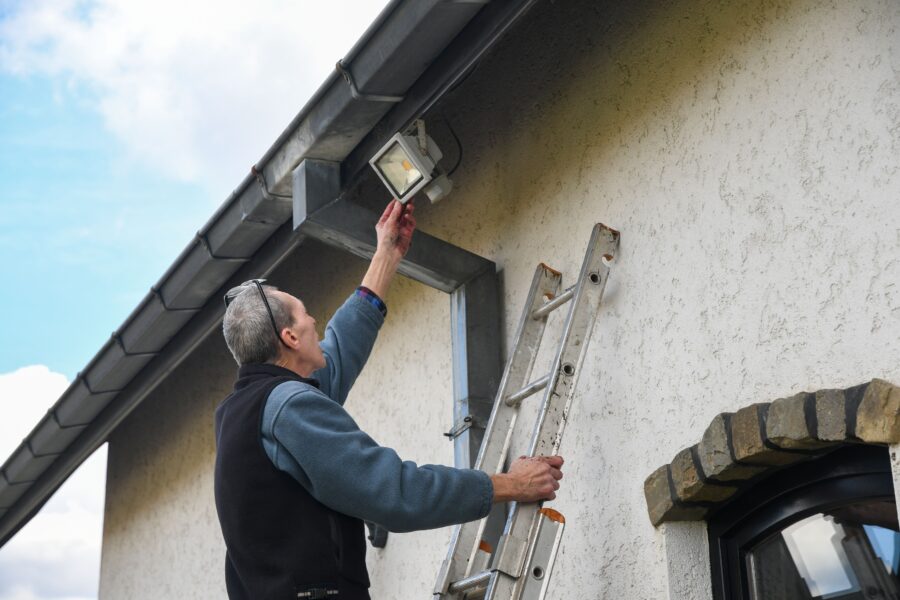
Step 3: Security lighting
Darkness is a burglar’s best friend. Well-placed lighting around your home removes hiding spots and makes any movement immediately visible — to you, your neighbours, and passers-by.
Where to install lights:
- Front entry and porch
- Driveway and garage
- Side gates and pathways
- Back garden and rear entry points
Best types of security lighting:
- PIR motion-activated lights — only switch on when movement is detected, saving power and drawing immediate attention to activity
- Dusk-to-dawn lights — automatically on from sunset to sunrise, great for driveways
- Smart lights — controlled via app, can be scheduled or triggered by your security system
Tip: Solar-powered security lights are a cost-effective choice in most Australian climates and require no electrician — simply mount and point.

Step 4: Secure your windows
Windows are the second most common entry point after doors, yet they’re often overlooked. A locked window is much more than just a latch.
What to do:
- Fit window locks on every openable window
- Install window security film — an inexpensive clear film that holds glass together if broken, slowing entry significantly
- Add window sensors to your security system (see Step 2)
- For ventilation without vulnerability, fit ventilation locks that allow windows to open just 10cm
Step 5: Secure the garage
The garage is one of the most overlooked entry points — and once inside, an intruder has shelter, tools, and sometimes a direct door into your home.
What to do:
- Always lock the internal door between your garage and home — treat it like a front door
- Upgrade to a smart garage door opener with rolling code technology (older openers can be hacked with cheap devices)
- Never leave your garage door remote in your car — if your car is broken into, your home is next
- Fit a padlock or hasp on manual garage doors as a secondary lock
- Cover garage door windows with frosted film so valuables inside aren’t visible
Step 6: Add smart video doorbells and cameras
A smart video doorbell can significantly reduce risk and provide valuable footage if something does happen.
Recommended coverage:
- Front door — a video doorbell (Ring, Nest, Eufy) lets you see and speak to anyone at the door, even remotely
- Driveway — captures vehicle and foot traffic approaching your home
- Back garden — covers the most likely point of unseen entry
- Internal camera — optional, but useful for monitoring while you’re away (or checking on pets!)
Look for cameras with 1080p resolution or higher, night vision, two-way audio, and cloud or local storage.
Step 7: Safety habits
Security isn’t just about hardware. These simple habits make a big difference:
- Get to know your neighbours — a connected street is a safer street. Consider joining your local Neighbourhood Watch or Facebook community group.
- Check your fences and gates — repair broken panels, fit self-closing hinges and lockable latches on all gates.
- Trim overgrown hedges and shrubs — especially near entry points. Dense greenery creates hiding spots.
- Check smoke and carbon monoxide alarms — test every detector in the home and replace batteries immediately.
- Mark your valuables — use a UV pen or engraver to mark electronics, jewellery, and tools with your name and postcode.
A safe home is a happy home
Moving is overwhelming enough without worrying about security — but tackling these steps in your first week gives you peace of mind that lasts for years. Start with the locks, add lighting and an alarm system in the first week, and work through the rest as you settle in.
Tip: Print this article as your move-in security checklist and tick each item off as you go. Share it with a friend or family member who’s moving home — it could make all the difference.
Interested in similar articles? Why not check these out: