






Stress Reduction Techniques
Following on from last month’s article on Top Tips to Maintain Your Mental Health, here we discuss some stress reduction techniques to assist in stressful or anxious times.
We all worry from time to time or go through periods of stress. But chronic stress or anxiety can be paralysing and affect our health. For some, chronic stress symptoms may include shallow or fast breathing, dizziness, or sweaty palms. While there’s no magic solution (other than starting anxiety therapy or taking medications), there are many things you can do to release tension and soothe your nervous system. Here, we explore different relaxation techniques that can be incorporated into your daily life, that will help reduce stress and anxiety.
Deep breathing
Slow, intentional breathing exercises activate the parasympathetic nervous system, which counters the body’s stress response. Research shows that deepc breathing can lower heart rate, reduce cortisol levels, and improve emotional regulation. Over time, regular breathing practices can improve resilience to daily stressors and reduce symptoms of anxiety. Plus, you can practice it virtually anywhere.
When stressed, we breathe from the chest (thoracic breathing), but when relaxed, we breathe from the belly (abdominal breathing). To calm your body and mind, it’s best to breathe into your diaphragm so that your belly rises and falls with each inhale and exhale, not the chest.
Next time you catch yourself feeling anxious, take some time to:
- Place one hand on your belly and the other on your chest.
- Slowly inhale through your nose into your stomach and notice your hand rising while the one on the chest remains still.
- Wait three seconds there.
- Then exhale slowly through your mouth and observe the sensation of your belly falling – while your chest remains still.
- Wait three seconds here as well.
- Repeat the sequence at least ten times or until a wave of calm and relaxation washes over you
That relaxation method allows you to slow your breathing, provide more oxygen and direct your focus away from distressing thoughts and onto your bodily sensations.
Mindfulness
You can use mindfulness practices to train your brain to observe thoughts and emotions without immediately reacting to them. Studies show that mindfulness improves emotional regulation, decreases rumination, and reduces activity in brain regions associated with stress and fear responses.
Mindfulness meditation is about observing your thoughts, emotions and body in the present moment and returning to the here and now whenever your mind wanders. It’s about:
- Taking a step back,
- Letting go of expectations,
- Remaining non-judgmental and curious – like a scientist monitoring a fascinating phenomenon.
Read more on mindfulness meditation here.
Visualisation
Let’s say you’re about to give an important presentation at work, and you feel increasingly anxious. Rather than imagining optimistic scenarios, your mind fixates on the worst scenario possible like embarrassing yourself in front of coworkers or saying something stupid.
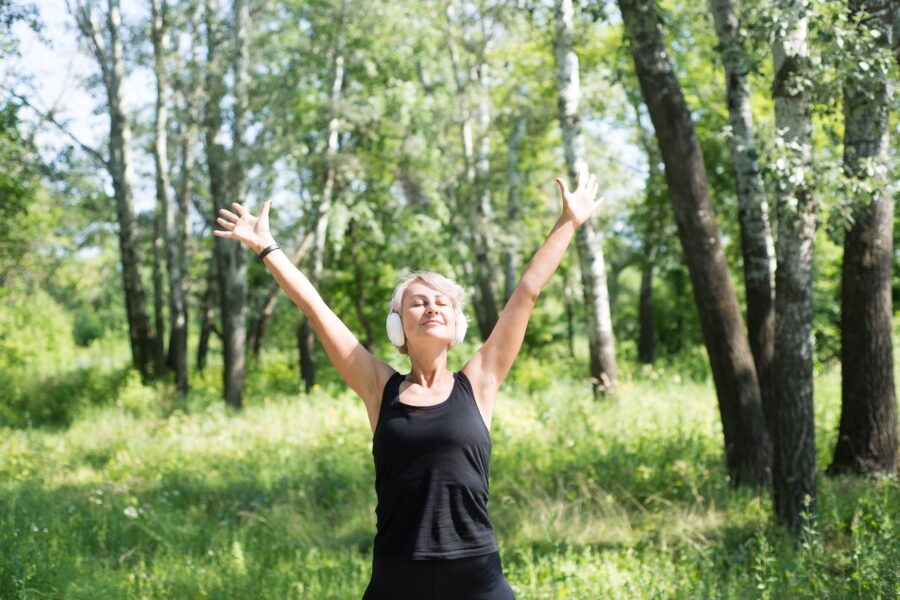
That’s where visualisation techniques like guided imagery step in. Using your imagination, you can think of something calm, like a happy memory, a relaxing place, a natural landscape, or a soothing activity.
All you need to do is:
- Relax your body.
- Breathe in and out slowly.
- Pick a relaxing scenario, i.e. a lush green forest.
- Engage all your senses, i.e. feel the texture of moss beneath your feet, smell the ground after a rain, hear the gentle rustling of leaves.
- Stay in this environment for a while and enjoy your happy place.
Journaling
Expressive writing helps the brain process emotions more efficiently by organising your thoughts and reducing mental clutter.
Research suggests that journaling can lower stress levels, improve mental distress, and enhance mood by helping you make meaning out of experiences rather than suppress them. Over time, this supports healthier emotional processing and better stress recovery.

Grounding exercises
Grounding techniques anchor attention in the present moment through sensory awareness, helping interrupt spiralling thoughts and anxiety loops. Studies show that grounding practices can reduce symptoms of anxiety and emotional distress by shifting the brain out of threat mode and into a state of safety and awareness. These exercises are especially helpful during moments of acute stress or overwhelming emotions.
Read more about grounding techniques here.
Muscle relaxation exercises
“An anxious mind cannot exist in a relaxed body”, claims Dr Edmund Jacobson, the author of progressive muscle relaxation (PMR) – a relaxation treatment that boils down to slowly tensing and relaxing different muscle groups, starting from toes and passing through each part of your body to end with your neck and head. When done without rush and focus, this technique helps loosen your muscles, soothe any pain, release tension, and provide stress relief.
Here’s a link to a guided version of this exercise.
Get professional help
If you feel like anxiety is really affecting your life, relaxation techniques might be insufficient in dealing with this issue since they alleviate symptoms but don’t cope with root causes.
Anxiety therapy like CBT has high treatment success rates, helping to:
- Address underlying problems,
- Recognise unhelpful thoughts or behavioural patterns,
- Learn using practical tools like deep relaxation techniques to manage the paralysing effects of anxiety.
Start with one of the above techniques and consistent practice, observe how your nervous system responds and build a personalised mental health toolkit that works best for you – deep breathing, mindfulness, journaling and grounding techniques.
Disclaimer: This article is for informational purposes only. These techniques are general suggestions. This is not medical advice. Please consult a healthcare provider before starting any new wellness routine, especially if you have existing health conditions or severe anxiety.
Interested in similar articles? Why not check these out:
The power of positive thinking
The benefits of more time outdoors
The ultimate guide to natural therapies
Source: https://www.amenclinics.com/blog/top-10-tips-to-maintain-your-mental-health-for-daily-practice/