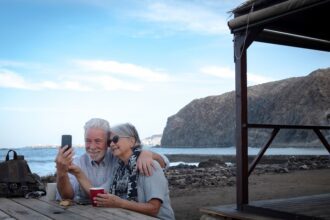








Travelling on a Budget
You don’t need a big bank balance to see the world — or your own backyard. You just need to be smarter than the person paying full price next to you.
Here are the tips that make the biggest difference, at home and overseas.
Timing beats everything
The same seat, the same room, the same view — often half the price, just because of when you go.
- Travel in the shoulder seasons. In Australia that’s roughly March–May and September–November. Fewer crowds, milder weather, cheaper fares. February, March and November are usually the cheapest months for domestic flights.
- Dodge the school holidays. This is the single biggest saving available to anyone without kids in tow. If you’re travelling with grandkids, book much earlier instead.
- Fly midweek. Tuesday and Wednesday departures are consistently cheaper than Friday or Sunday.
- Book in the sweet spot. For international trips, around 6–14 weeks ahead works for quiet periods; stretch to 12–20 weeks for July, Christmas and European summer. Booking 9 months out rarely saves you a cent, and inside 3 weeks almost always costs more.
- Set price alerts on Google Flights or Skyscanner rather than checking every day. Let the deals find you.
Use your Seniors Card
If you’re eligible and haven’t got one, stop reading and go apply. It’s free, and it works interstate too.
What it’s worth around the country:
| SA | SA cardholders travel free on Adelaide Metro buses, trains and trams, all day, every day. Interstate cardholders can get a free 14-day off-peak Seniors Pass. |
| VIC | 50% off weekday fares, plus free weekend travel statewide, free travel vouchers, and free travel during the Victorian Seniors Festival in October. |
| NSW | Gold Senior/Pensioner Opal card — unlimited travel for $2.50 a day across trains, buses, ferries, metro and light rail. |
| WA | Free off-peak travel on a WA Seniors SmartRider; interstate visitors get a Concession SmartRider. |
| TAS | Free public transport for everyone on most operators, currently extended to 30 June 2027. |
| ACT | Free off-peak travel at 60–69; free travel any time at 70+. |
| QLD | Queensland Rail Travel gives up to 50% off adult fares on long-distance trains — and it honours interstate Seniors Cards. |
Two habits worth forming: carry the card everywhere, and always ask. Cafés, cinemas, tourist parks, ferries and museums often have a seniors rate that isn’t advertised.
(Concessions change. Check your state’s Seniors Card website before you rely on one.)
Where you sleep is where the money goes
Accommodation is usually the biggest line in the budget, so it’s where the biggest wins are.
- House and pet sitting. Free accommodation in exchange for watering plants and walking a dog. Sites like Aussie House Sitters and Mindahome are popular with Australian over-50s.
- Country showgrounds. Council-run, often $5–$15 a night for a powered site, sometimes free, and usually a short walk from the town bakery. Find them on WikiCamps or CamperMate.
- Free and low-cost camps. There are hundreds nationwide, from the Blue Mountains to Tasmania’s Cockle Creek. A $10 council site with hot showers often beats a $0 site with a pit toilet — don’t chase free at the cost of a decent night’s sleep.
- Midweek discounts. Many caravan parks quietly cut rates Monday to Thursday, and plenty offer a seniors rate year-round.
- Country pubs. Simple rooms upstairs, a fraction of a motel, and a meal downstairs.
- Stay longer in fewer places. Weekly and monthly rates are far cheaper per night, and you’ll see more by moving less.

Getting around Australia for less
- Fuel is a real budget item. Use Fuel Map Australia or Google Maps to compare prices, and fill up midweek — Tuesday and Wednesday are often the cheapest days.
- Buy the annual national parks pass if you’ll visit more than a few. It pays for itself quickly.
- Consider the train. Long-distance rail with a seniors discount can beat flying once you add bags, transfers and airport parking.
- Buy your gear second-hand. Facebook Marketplace is full of near-new camping and caravan equipment from people who tried it once.
Overseas, without going broke
- Pick a destination where your dollar stretches. Vietnam, Malaysia, Sri Lanka, Portugal, Greece outside summer, Turkey, Georgia. A month in Chiang Mai can cost less than a fortnight on the Gold Coast.
- Go in the off-season. Fares to Western Europe can drop dramatically by mid-September, and the queues disappear with the crowds.
- Get a card with no overseas fees. Wise, Revolut or a travel-friendly debit card. Those 3% charges add up fast, and always choose to be charged in the local currency, not Australian dollars.
- Eat where the locals eat. Lunch specials, markets, bakeries. A hotel breakfast is the most expensive meal you’ll ever skip.
- Free is everywhere. Free walking tours (tip what it’s worth), free museum days, cathedrals, parks and public gardens.
- Slow down. Three cities in three weeks costs far less than nine, and you’ll remember it.
Small habits, big savings
- Take a refillable water bottle and a keep cup.
- Pack a picnic lunch a few days a week. Splurge on dinner instead.
- Do your own laundry — hotel laundry is highway robbery.
- Take one bag you can carry yourself. Cheaper fares, no baggage fees, no waiting.
- Set a daily spending number before you go, and check in every few days.
- Ask other travellers. Grey nomads and Facebook travel groups know things no website will tell you.
Budget travel isn’t about going without. It’s about spending your money on the things you’ll remember, and refusing to spend it on the things you won’t.
Sources and useful links
- Flight booking windows and cheapest months — ShopBack travel guides
- House and pet sitting — The Senior
- Free camping and showgrounds — Camplify
- Smartraveller — official Australian Government travel advice
Interested in similar articles? Why not check these out:
Top 10 travel destinations for 2026