






Scam Prevention
Scams are on the increase with smarter and more high-tech cons that are increasingly catching people out. According to data from 2025, there was a total of $2.18billion lost to scams in 2025. This was up by 7.8% from the year before. Scam reports were down by 2.7% with 481,523 reports in 2025. While reports have shown a decrease in frequency, the total value stolen indicates that scams are becoming more lucrative for criminals. Full report HERE.
The true losses to scams is likely to be much higher, as previous Scamwatch research has shown that many people do not report their losses.
The majority of losses over this period have been to investment scams (often online scams) with $837.7 million of reported losses. Followed by payment redirection, romance, phishing and remote access scams.
Common scams
Scammers target people of all ages and backgrounds, however, some scams are more likely to target older people.
This is often because older Australians have accumulated greater wealth than younger people, making them attractive targets for scammers. Older Australians may also be seen by scammers as generally less internet and computer savvy or familiar with new technology.
Online scammers will also scour social media and dating sites for older Australians who have recently divorced or lost a long-term partner, taking advantage of their inexperience with these sites and their often-vulnerable emotional state.
One of the best ways to beat the scammers is to be informed and aware of the latest scams that are targeting Australians. The best way to do this is to regularly visit the Scamwatch website and read about the latest scams – www.scamwatch.gov.au/ . Here are some common online scams that are targeting older Australians:
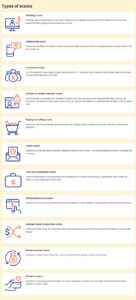
Source – https://www.scamwatch.gov.au/types-of-scams
Ways scammers reach you
Text or SMS scams
Scam messages look like they are from the government, businesses you deal with or even your own family and friends to try and catch you out
Phone scams
Scam calls are more than annoying – they cost Australians $141 million in losses last year.
Emails scams
Scam emails look like the real thing, but watch out for links and attachments designed to steal your money or information.
Social Media scams
Be suspicious of anyone who unexpectantedly contacts you on social media. Scammers uise these platforms to gain your trust and steal your money.
Website scams
Scammers can pretend to be anyone online to deceive you into trusting them.
In-person scams
Some scams take place in person.
For more information on the above please visit – scamwatch.gov.au/types-of-scams
Protect yourself
Scams are everywhere, targeting people from all walks of life and costing Australians billions of dollars each year. Whether it’s fake emails, online schemes, or unexpected phone calls, scammers will find new ways to gain your trust and steal your money or personal information. Here are 3 simple steps can help protect you from scammers, as advised on scamwatch.gov.au.
STOP
Always take a moment before giving your money or personal information to anyone.
Scammers will create a sense of urgency to pressure you into acting quickly. Don’t rush to make decisions about money or sharing personal details.
What to do:
-
Say no, hang up, or delete suspicious messages.
-
Take time to think before responding to unexpected requests.
-
Don’t let anyone pressure you into immediate action.
-
Trust your instincts if something feels wrong.
CHECK
Make sure the person or organisation you’re dealing with is real.
Scammers pretend to be from organisations you know and trust. Always verify who you’re really dealing with before taking any action.
What to do:
-
Contact the organisation directly using phone numbers or email addresses you find on their official website or app.
-
Research investment opportunities or offers through official sources like ASIC.
-
Get a second opinion from family, friends, or professionals.
PROTECT
Act quickly if something feels wrong.
The sooner you act, the better you can protect yourself and others from scammers.
What to do:
-
Contact your bank immediately if you think your money has been stolen or you’ve shared financial details.
-
Contact IDCARE (www.idcare.org or call 1800 595 160) if you want support to recover — they can help you create a plan to limit the damage of scams.
-
Report to Scamwatch (www.scamwatch.gov.au) to help protect others.
-
Report to police (www.cyber.gov.au).
-
Change passwords and security details if you think they’ve been compromised.
-
Monitor your bank statements and credit reports for unusual activity.
-
Report the scam to the impersonated organisation and platform where the scam is happening.
-
Being scammed can feel overwhelming. Support is available at Lifeline on 13 11 14 or Beyond Blue on 1300 22 4636.
Interested in similar articles? Why not check these out:
Sources:
All information has been sourced from www.scamwatch.gov.au